

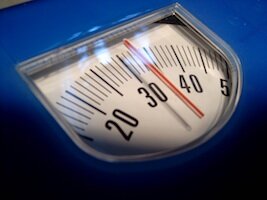
The thing of it is, my sister’s death has taught me that fat shaming from the outside world is, astoundingly, the very least of my problems, even though it affects my friendships, relationships, the quality of care I receive on literally any platform, and my chances of getting things like jobs and housing, regardless of my references and qualifications. I have been realizing in the past year and a bit that the worst damage is the damage I now do to myself: internalized fat phobia.
Author Archive
25 Feb 2014
Inertia
I have been literally paralyzed these last couple of months. I began working towards a college degree in September of this year. Initially I chose one course, hoping that by the time it was over I’d have a better idea of what I wanted to major in, since I am interested in so many things and the choice seemed impossible. If anything, it’s made the whole thing worse.
19 Aug 2013
Identity

I have pretty much always identified as female. Cis-gender. I have never thought about anything else, really. I have never been aware that there are other options out there, much less considered them. But I’ve also been on the tomboy side of female, right from the get-go. I hung out with boys, I beat up boys, I followed boys into the bathroom and watched them pee. I really really wanted a penis, and I tried as hard as I could to grow one. I remember when I was little I’d sit in the passenger seat of the car as I went with one of my parents on an errand-running mission, and I would feel a certain friction between my legs or against my groin from the way I was sitting on the seat, the way the seatbelt fit or my pants were tugging, and imagine a penis growing between my legs.
09 Aug 2013
What Does Four Months Look Like?: An Ode To My Body

I have been binge/purge free for 4 months on the 9th. I’ve had to tackle it from multiple levels. The only thing that has worked for me is not trying to regulate what I eat and trying my damnedest not to get caught up in what is ‘healthy’ and what is ‘unhealthy’. I eat what I want, make sure I get enough, and stop when I’m full. This was NOT easy initially and I still have moments of panic and insecurity. I know I’ve lost a bunch of weight but I still weigh X pounds. I’m fat. (I claim that title intentionally.) So, there is the body dysmorphia and fat phobia to be addressed.
01 Aug 2013
End of an Era

Tomorrow is my seven-year anniversary of sobriety. Well by the time it’s posted it’ll be ‘today’ or ‘yesterday’. But y’know what I mean. It’s weird. Seven years. It’s a long time, and then it’s also not. It also goes very fast when life passes by and one is not mindful or living in the present. I can honestly say that most of my recovery has been one big, long panic. Will I get loaded? Will I find a job? How am I going to pay the rent?
11 Jun 2013
Make Recovery Your Own
I always say ‘I’ve been in recovery for…’ and then either go on to say ‘Just about two months’ if I’m talking about my eating disorder or ‘Just about seven years’ if I’m talking about alcoholism. I’m not sure why. I guess because I have come to believe that recovery is only recovery if I’ve been ‘clean’ for a length of time. I’m not sure why; I do not hold others to that standard. I’m pretty much alone in that category.
14 May 2013
As The Wheel Turns: New Diagnosis

Three years ago, when I FINALLY got some psychiatric help for an episode that was already almost a year old at that point (thanks for nothing), my then-psychiatrist diagnosed me with panic disorder/agoraphobia, OCD, Borderline Personality Disorder, depressive disorder, dissociative disorder, and Eating Disorder Not Otherwise Specified. Believe it or not, I was okay with that. It gave me something to hold onto, because I couldn’t make sense out of what was happening to me anymore. By the time I got in to see him, it was already too late. The damage was done. I will never fully recover. It’s not pessimism, just plain fact. Too much has happened to me, and rearranged my brain and how I perceive things.
09 May 2013
A Different Approach
Once upon a time, there was me. I was a drunk. I wanted to die. I couldn’t handle the way I was living anymore. So I went into a recovery house. I failed. I went to another one. Three years into sobriety I had a mental breakdown. Things have been fucked ever since. But through it all I’ve also had this eating disorder, see. So it’s not enough to try to get my life back from mental illness. I’ve got an eating disorder too.
04 Mar 2013
DBT Skills: Emotion Regulation
This is the final installment of the DBT Skills series. I want to say a special thank you to Breyonne for her hard work in writing this series – I know it will be useful for so many of our readers!
When I first heard the words ’emotion regulation’, the first thing I thought was, Oh great. Another therapist trying to tell me that feelings are just feelings, they can’t hurt me, they can’t kill me, blah blah yadda yadda. And I’ve been to enough therapy, enough counseling, enough self-help meetings to know this, even if only theoretically. So I wasn’t prepared to learn a whole lot from this module. I couldn’t have been further from the truth.
28 Sep 2012
DBT Skills: Interpersonal Effectiveness

I have to admit that social interaction and communication are not my strongest points. This is a relatively new development for me, or so I thought. I used to think I was great at using my voice, at standing up for myself, at being in social situations. Today there are a number of barriers that prevent me from being effective in interpersonal communication. One of them is mental and emotional health issues. It’s really hard for me to connect with others when I don’t feel so great myself. Another is acute hearing loss, in both ears, coupled with tinnitus. And finally – and probably the most overwhelming for me, especially when it comes to asking for what I need and speaking up for myself, or saying no when being asked for something – I was raised in an environment that didn’t really encourage me to use my voice under any circumstances. In fact, it was preferred if I was invisible, or at least that’s how I translated it.